Dental Implants Bakersfield CA: What Happens During Surgery?
For many patients, the hardest part of getting dental implants is not the surgery itself. It is the uncertainty beforehand. People tend to imagine a long, painful procedure, a dramatic recovery, or a result that feels foreign in the mouth. In practice, implant surgery is usually more methodical than dramatic. It follows a careful sequence, and when planning is done well, most of the day feels surprisingly manageable.
If you have been researching Dental Implants Bakersfield CA, it helps to know what actually happens once you sit in the chair. The https://josueccrj582.raidersfanteamshop.com/dental-implants-bakersfield-ca-for-replacing-teeth-permanently process is precise, but it is not mysterious. A skilled implant dentist or oral surgeon works through a series of small, controlled steps designed to place a titanium implant in the jawbone where a missing tooth root used to be. Everything from the imaging to the anesthetic to the shape of the site has a purpose.
The details vary from person to person. A single front tooth replacement is different from a back molar, and both are different from a full-arch case. Some patients need a graft before implant placement. Others can have an extraction and implant done on the same day. The broad outline, though, is consistent enough that you can understand what to expect before your appointment.
It starts long before the day of surgery
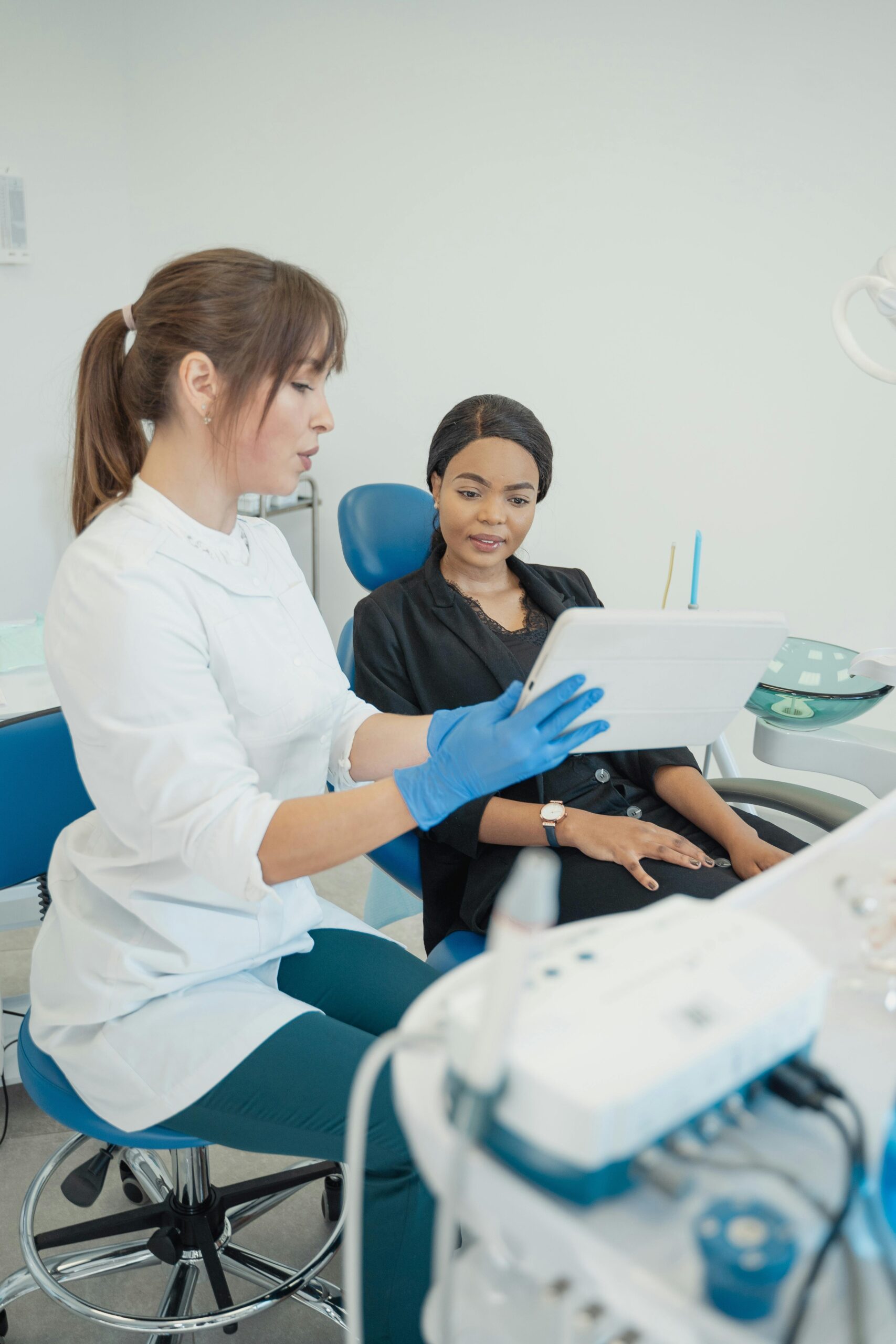
The surgery itself is only one phase of implant treatment. Before anyone picks up an instrument, there is an evaluation period that matters just as much as the procedure. Good implant dentistry depends on planning. Poor planning leads to poor positioning, gum problems, bite issues, and implants that are technically integrated but hard to restore well.
At the consultation, the clinician looks at several things at once. Bone height and width matter, but so does gum quality, how you bite, whether you clench or grind, where the nerves and sinus spaces are located, and the condition of neighboring teeth. A patient who lost a tooth last month presents differently from someone who has had a missing tooth for ten years. Bone tends to shrink after an extraction, and the longer the space has been empty, the more likely the jaw contour has changed.
Most offices use digital radiographs, and many rely on 3D cone beam imaging for implant planning. That scan gives a much clearer picture of the bone volume and critical anatomy. In lower back teeth, for example, the inferior alveolar nerve has to be respected. In the upper back jaw, the sinus often limits implant length and position. These are not minor details. They affect whether surgery can be straightforward or whether you need additional steps such as sinus augmentation or grafting.
Medical history also matters more than many patients expect. Diabetes, smoking, certain osteoporosis medications, autoimmune conditions, and a history of head and neck radiation can all influence treatment choices. None of these automatically rules implants out, but they shape how cautious the team should be. In real practice, success often comes from knowing when to proceed and when to slow down.
What the morning of surgery usually feels like
Implant appointments are usually calmer than patients imagine. For a single implant, the visit may feel closer to a routine dental procedure than to what most people think of as surgery. You check in, review consent, confirm the treatment plan, and go over postoperative instructions before numbness sets in.
The team may ask whether you ate, whether you took any prescribed premedication, and whether you arranged a ride if sedation is planned. If the office is using local anesthetic only, many patients drive themselves home. If oral sedation or IV sedation is involved, someone else needs to drive.
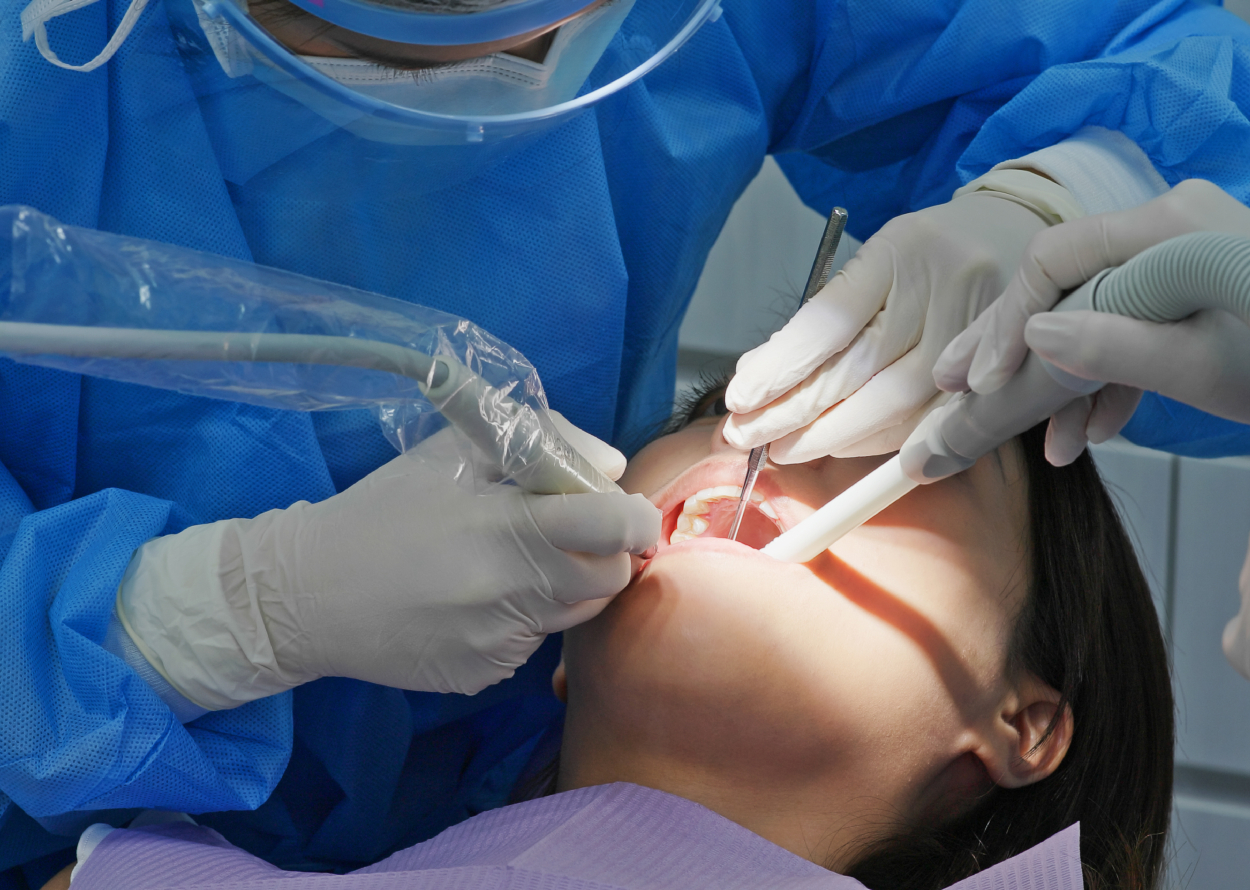
Once you are seated, the surgical area is prepared in a clean, organized way. Sterile instruments are set out. The cheek and lips are retracted so the dentist can see clearly. A bite block may be used to help your jaw stay open comfortably. If you are nervous, this is often the point where anxiety peaks, but most of that tension drops once the anesthetic has taken effect.
Numbing and sedation, what you are likely to feel
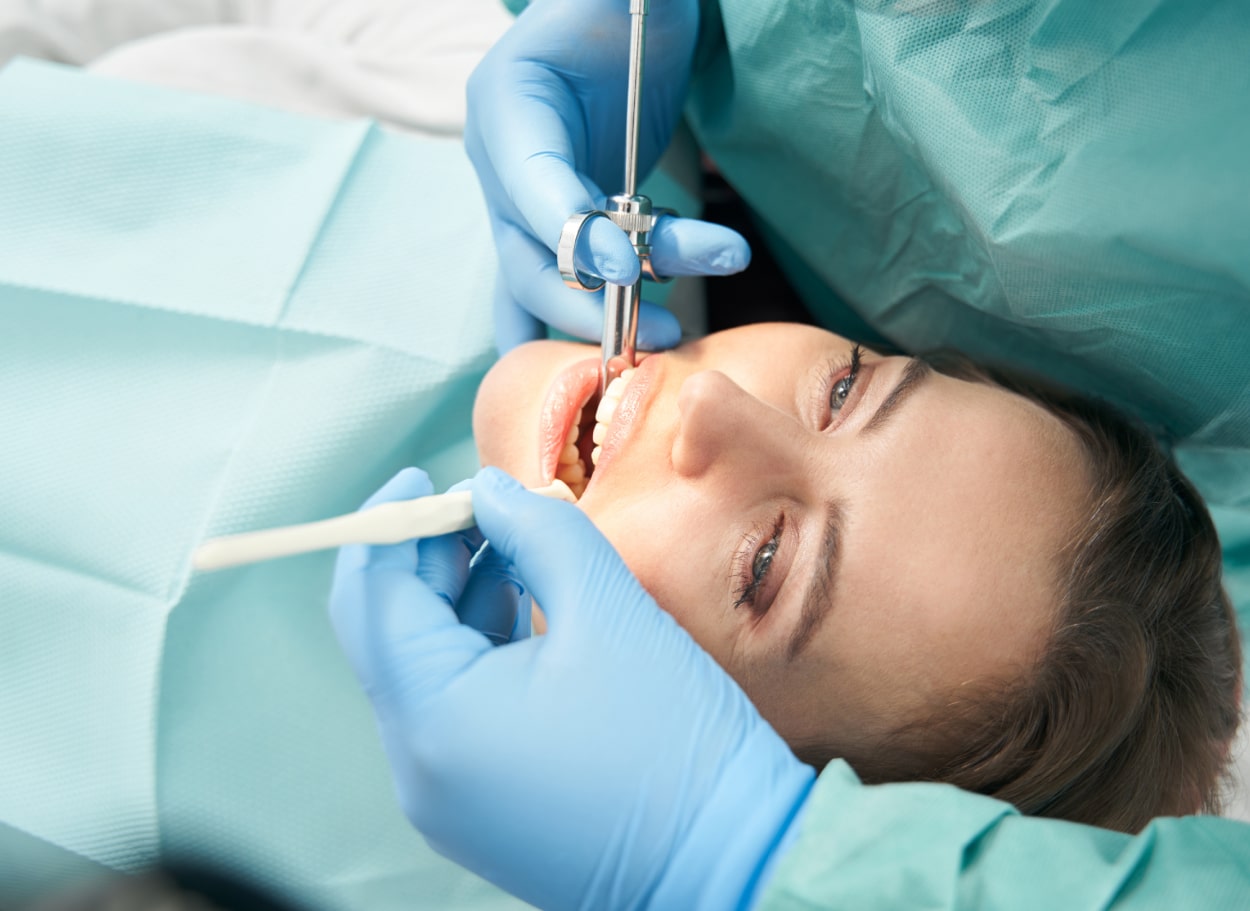
Pain control is one of the most misunderstood parts of implant treatment. During surgery, you should feel pressure and vibration, but not sharp pain. If you do, the surgeon stops and adds more anesthetic. That is standard, not unusual.
Local anesthetic is enough for many single implant cases. It numbs the gum and bone in the area. Bone does not respond exactly like soft tissue, which is why pressure sensations can feel odd even when you are fully numb. Patients sometimes describe it as hearing or sensing that something is happening without actual pain.
Sedation is used for comfort, not because implants are automatically severe procedures. Someone having one implant in an easy spot may not need anything beyond local anesthesia. A patient having several implants, extractions, or a full-arch procedure may benefit from deeper sedation.
A practical breakdown looks like this:
- Local anesthetic numbs the area and is the baseline for nearly every implant surgery.
- Nitrous oxide can take the edge off anxiety while keeping you awake and responsive.
- Oral sedation helps some patients relax, though it can leave the timeline of the visit feeling hazy.
- IV sedation is often chosen for longer or more involved surgeries because it provides deeper comfort and closer control.
The right choice depends on the complexity of treatment and the patient’s stress level, medical history, and past dental experiences. I have seen very calm patients breeze through implant surgery with local anesthetic alone, and very tough patients become deeply uneasy from the sounds and pressure. There is no prize for white-knuckling your way through treatment.
The first surgical step, access to the bone
Once the area is numb, the surgeon begins by exposing the part of the jaw where the implant will go. In some cases, this means making a small incision in the gum and gently reflecting the tissue to see the bone directly. In other cases, especially with guided surgery, a tissue punch may be used to create a small opening without raising a flap.
Which approach is better depends on the case. A flapless approach can mean less postoperative soreness and swelling, but it is not always the safest option. If visibility is limited or the gum and bone need reshaping, opening the tissue gives the surgeon better control. Precision matters more than minimizing the incision at all costs.
If the implant is being placed right after a tooth extraction, the first part of the appointment is the extraction itself. That extraction is usually done with particular care to preserve as much surrounding bone as possible. Implant surgeons often use techniques that are gentler and slower than what patients expect, because preserving the socket walls improves the foundation for the implant.
Creating the implant site
This is the part patients often imagine incorrectly. An implant is not screwed randomly into the jaw. The site is prepared in a measured sequence using specialized drills of increasing diameter. The surgeon begins with a pilot drill to establish position and angulation, then enlarges the channel gradually until it matches the dimensions planned for the implant.
Depth and angle are checked repeatedly. Depending on the system and case, guides, depth markings, radiographs, or surgical stents may be used. Irrigation keeps the bone cool during drilling. Heat control matters because overheated bone can compromise healing.
For patients, this stage often feels like pressure, vibration, and noise. The sounds can be unpleasant if you are not prepared for them, but they are not a sign that something is wrong. The jaw transmits vibration differently than other parts of the body, so even a routine step can feel intense in a sensory way.
The quality of the bone influences how the site is prepared. Dense lower jaw bone may require a different drilling protocol than softer upper jaw bone. In the back upper jaw, for example, the bone is often less dense, and getting good initial implant stability can require careful technique. This is one reason why implant placement is part engineering, part biology. The same hardware behaves differently depending on the site.
Placing the implant itself
After the site is prepared, the implant is inserted. Most modern implants are made of titanium, shaped somewhat like a small threaded cylinder or tapered root form. The implant is advanced into the prepared site slowly and with controlled torque. This is the moment people often refer to as “putting the screw in,” but in reality it is more nuanced than that. Stability is being evaluated as the implant goes in.
Primary stability, meaning how firmly the implant sits in bone on the day of placement, matters a great deal. It helps determine whether a healing cap can be placed immediately, whether a temporary tooth can be attached, or whether the site should be left completely unloaded while it heals. High initial stability is generally a good sign, but it is only one part of success. The long-term goal is osseointegration, the biological bond between bone and implant surface over time.
If everything looks good, the surgeon may place either a cover screw, which sits flush and stays under the gum during healing, or a healing abutment, which protrudes slightly through the gum and shapes the tissue while the implant integrates. Which one is used depends on the treatment plan and the amount of stability achieved.
When bone grafting happens at the same visit
Not every implant case is just implant plus closure. Sometimes the anatomy leaves a gap between the implant and the surrounding bone, especially after immediate placement into a fresh extraction socket. In other situations, the ridge is thin or has defects that need reinforcement. When that happens, graft material may be placed around the implant.
This part is common enough that it should not alarm patients. Grafting is often used to support contour, preserve volume, or improve the site for long-term gum aesthetics. The material may be covered with a membrane before the tissue is closed. From the patient’s perspective, this does not usually change the feel of the appointment much, though it can affect healing instructions.
A front tooth case is a good example of why judgment matters. A technically integrated implant can still look disappointing if the gum collapses or the ridge loses contour. In visible areas, surgeons often think beyond the implant itself and manage the surrounding architecture carefully.
Stitching the area closed
After the implant and any grafting material are in place, the tissue is repositioned and sutured. Some sutures dissolve on their own. Others need to be removed at a follow-up visit. The closure should be secure but not overly tight. Tissue that is strained tends not to heal as well.
Patients are often surprised by how little the area may look like afterward, especially in small single-tooth cases. There is no dramatic external wound. Most of what you notice is a slightly puffy gumline, a few sutures, and perhaps a healing cap peeking through if one was placed.
Bleeding is usually limited. A little oozing for the first several hours is normal. So is mild swelling that develops later that day or the next morning. A procedure can be biologically significant while still appearing modest from the outside.
How long surgery takes
A straightforward single implant can often be placed in well under an hour of actual surgical time. The full appointment may be longer because of numbing, setup, imaging checks, and postoperative review. More involved cases take longer, especially if they include extraction, grafting, sinus work, or multiple implants.
Full-arch implant procedures are in a different category altogether. Those cases can take several hours and involve more than one phase in the same appointment. They also require far more planning around bite, esthetics, and temporary prosthetics.
This is worth emphasizing because patients often compare unlike procedures. A neighbor who says, “My implant took twenty minutes,” may be describing a very simple site with ideal bone. Someone else may need a staged approach over several months. Neither story is more “normal” than the other.
What you feel once the numbness wears off
The recovery experience is usually less about severe pain and more about soreness, pressure, and fatigue in the area. Many patients compare it to the aftermath of a difficult extraction rather than to a major surgery. The first evening is often the peak of awareness. Day two can bring more swelling, then things typically start settling.
Discomfort varies with the extent of the procedure. A single implant placed into healthy healed bone can be fairly easy. An implant with extraction and grafting will usually be more noticeable. Several implants placed across the arch create a broader inflammatory response and more swelling.
Pain management often involves over-the-counter medication, though some patients receive prescription medication depending on the surgery. Ice packs help during the first day. Soft foods are usually recommended for a period, and patients are asked to avoid chewing directly on the site until the surgeon says it is safe.
Here are the postoperative points that tend to matter most:
- Minor bleeding or pink saliva on the first day is common.
- Swelling usually peaks around forty eight to seventy two hours.
- Sharp rinsing, spitting, and smoking can disrupt early healing.
- Chewing hard foods on a new implant site can jeopardize stability.
- A sudden increase in pain, swelling, bad taste, or fever deserves a call to the office.
Patients sometimes assume that if they feel relatively fine, they can return immediately to normal eating. That is one of the more common mistakes. Implants need a quiet healing period. Feeling good is not the same as being fully healed.
Healing under the surface
The most important part of implant treatment happens after surgery, when nothing appears to be happening. Bone begins remodeling around the implant surface. That process takes time. In many cases, the integration period runs a few months, though timing varies based on bone quality, implant stability, grafting, and whether the site is in the upper or lower jaw.
This waiting period can frustrate patients, especially when the visible wound looks healed after a week or two. The gum may look normal long before the bone biology is ready for a crown. Rushing that timeline is not wise. A stable implant should be restored when the foundation is truly ready, not when the site merely looks tidy.
At the follow-up visits, the surgeon checks soft tissue healing, removes sutures if needed, and monitors signs of integration. In some offices, resonance frequency testing or radiographs are used to help assess readiness for restoration. The restorative phase, where the final abutment and crown are made, is its own process and deserves just as much care as surgery.
A few situations that change the script
Not every implant surgery follows the standard pattern. If the tooth being replaced is infected, the team has to decide whether immediate placement is appropriate or whether it is safer to extract, clean the area, graft if needed, and wait. Immediate placement can work very well in selected cases, but it is not automatically the best route.
Patients with long-term missing teeth often need bone augmentation because the ridge has narrowed. In the upper posterior jaw, sinus proximity can require a sinus lift before or during implant placement. Front tooth esthetics may call for connective tissue grafting to support the gum contour. Heavy grinders may need a carefully protected bite design and nighttime guard after the implant is restored.
This is one reason online averages and quick answers can be misleading. If you are looking into Dental Implants Bakersfield CA, it is worth choosing an office that explains the reasoning behind your specific treatment plan rather than offering a one-size-fits-all timeline.
Questions patients ask most often
A common question is whether implant surgery hurts more than extraction. For many people, the answer is no. Extractions, especially difficult ones, can create more postoperative soreness than a straightforward implant placed in healed bone. Another frequent question is whether the body rejects the implant. True allergy or “rejection” in the way patients often mean it is not typical. Failures are more often related to healing problems, infection, overload, smoking, systemic factors, or poor bone support.
People also ask if they leave with a tooth the same day. Sometimes yes, sometimes no. A temporary can be provided in many cases, especially in visible areas, but that depends on stability and bite conditions. A same-day tooth is not always a same-day chewing tooth. That distinction matters. Temporary restorations often exist for appearance and soft tissue shaping, not for full function.
Why the surgeon’s planning matters as much as the hardware
Patients understandably focus on the implant itself, the brand, the material, the size. Those factors matter, but technique and planning matter more. A well-designed implant placed in the wrong position creates trouble. The final crown may be hard to clean, awkward to bite on, or esthetically compromised. By contrast, even a routine implant system can perform beautifully when placed with thoughtful attention to bone, gums, angulation, and restoration.
This is where experience shows up in subtle ways. An experienced clinician knows when to graft a little more for contour, when a flapless approach is too risky, when a temporary should be avoided despite patient pressure, and when a borderline site needs staging rather than optimism. Good surgery often looks uneventful because the difficult decisions were made before the first incision.
For patients exploring Dental Implants Bakersfield CA, understanding the surgical day tends to replace fear with perspective. The procedure is real surgery, but it is usually controlled, deliberate, and easier than people expect. You are numbed carefully, the site is prepared precisely, the implant is placed in a planned position, and healing is protected so the bone can do its job. The event itself is only part of the story, but once you know what happens in that chair, the path forward becomes much easier to face.
Smyle Dental Bakersfield
2016 E St, Bakersfield, CA 93301, United States
+16614939040
FAQ About Dental Implants Bakersfield CA
What is the downside of a dental implant?
The main downsides of dental implants involve high financial costs, surgical risks, a lengthy healing process, and the potential for long-term complications.
How much does a full set of implants usually cost?
A full set of dental implants (covering both the upper and lower arches) typically ranges from $6,000 to $90,000+, depending heavily on the type of treatment, materials used, and whether the teeth are fixed or removable.
Can I have all my teeth pulled and get implants?
Yes, you can have all your teeth pulled and replaced with dental implants. Instead of placing a separate implant for every single tooth (which is costly and time-consuming), dentists typically use full-arch systems.
Ends · BEAUIKJV918